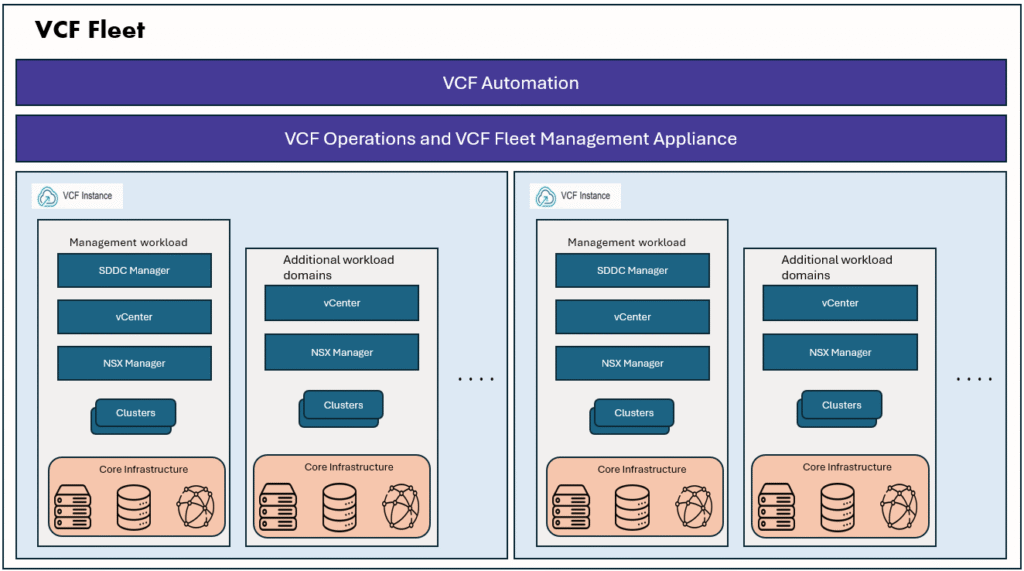
VCF 9.1 introduces VCF management services, which are a set of components that enable VCF Operations to perform centralized functions like life cycle management, log management, network analytics and more. A set of these components run on each VCF instance.
VCF Management services platform (VMSP) is a Kubernetes cluster that is running on a set of virtual machines within the management domain vCenter. There is no need to manage this Kubernetes cluster directly, it is self-managed by VCF operations and lifecycle. It is not advised to directly interact with this VMSP k8s cluster.
In this blog post, we will explore the VCF Management Services Platform (VMSP), its high-level architecture, and review the various components and services that run within the platform.
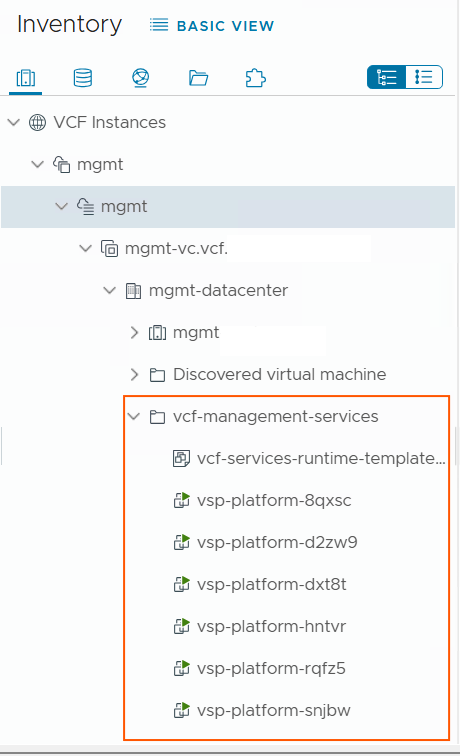
After you deploy a VCF 9.1 Management domain, VMSP automatically bootstrapped, it will be up and running. You will see new VMs like below in the screenshot.
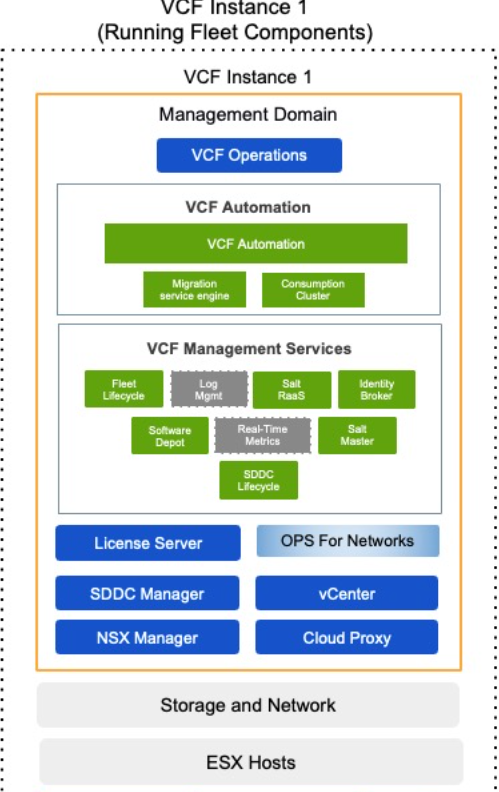
VCF Management services platform hosts below services/components.
If we login to the any of the VMSP cluster virtual machine, we should be able to interact with the VMSP Kubernetes cluster.
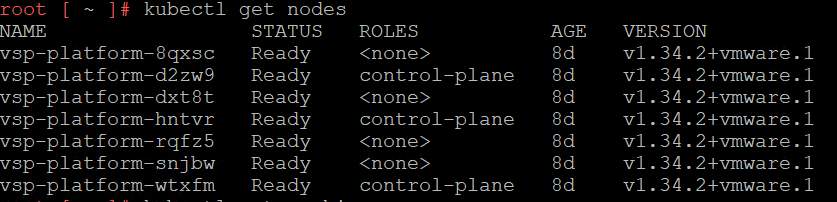
Here we can see the Kubernetes cluster nodes, the VMs in the previous image are actually forming the Kubernetes cluster and 3 of them are actually running the control plane components to manage the k8s cluster itself and remaining nodes are running the pods/containers for various VCF Management (Fleet/LCM) components.
Next let’s look at the namespaces in this K8s cluster.
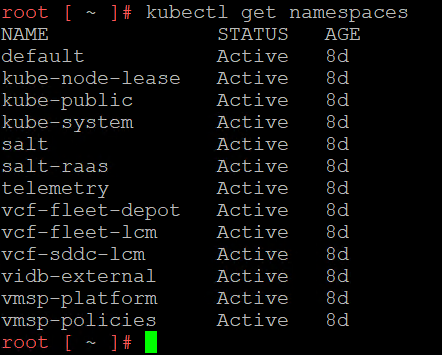
Fleet-level services provide centralized management functions that are shared across the VCF environment:
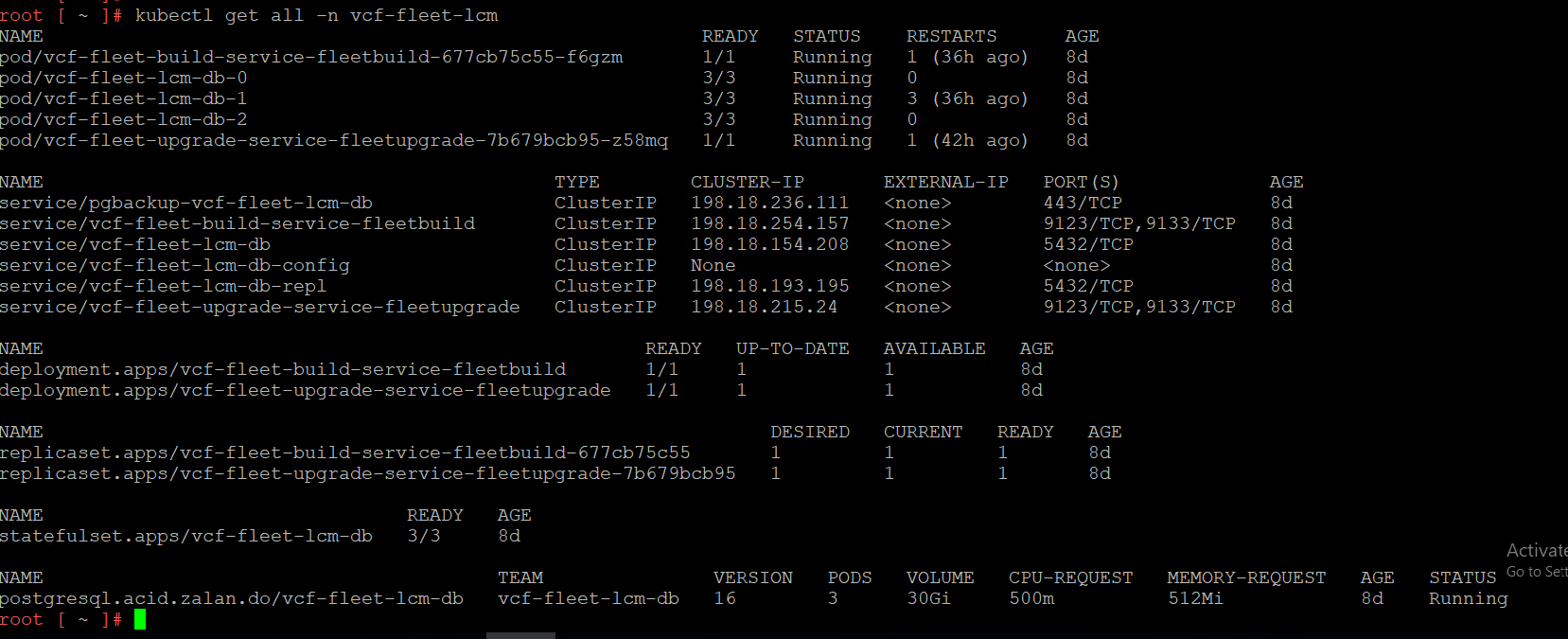
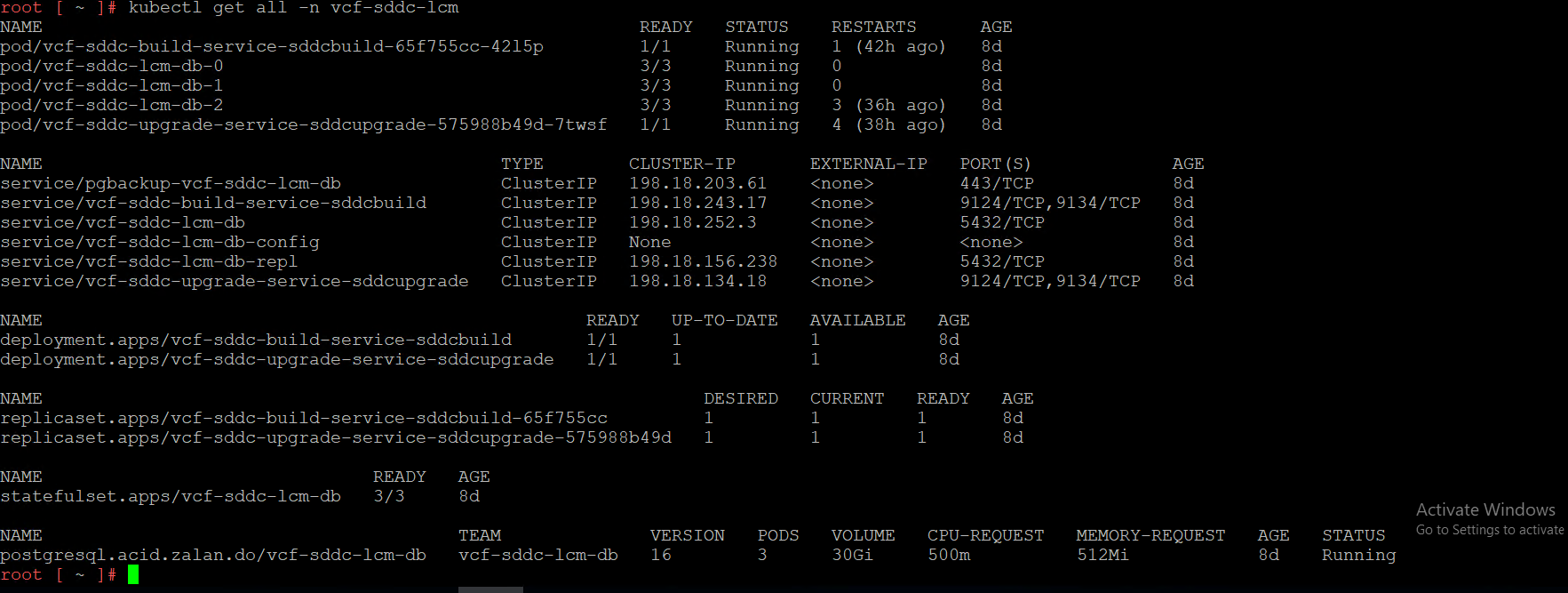
- vcf-fleet-lcm and vcf-sddc-lcm – Host lifecycle management services responsible for software updates, upgrades, and overall lifecycle operations on VCF Fleet components such as VCF ops, and SDDC components.
- salt-raas – Provides Salt RaaS (Remote API as a Service) capabilities used for automation, configuration management, and orchestration workflows.
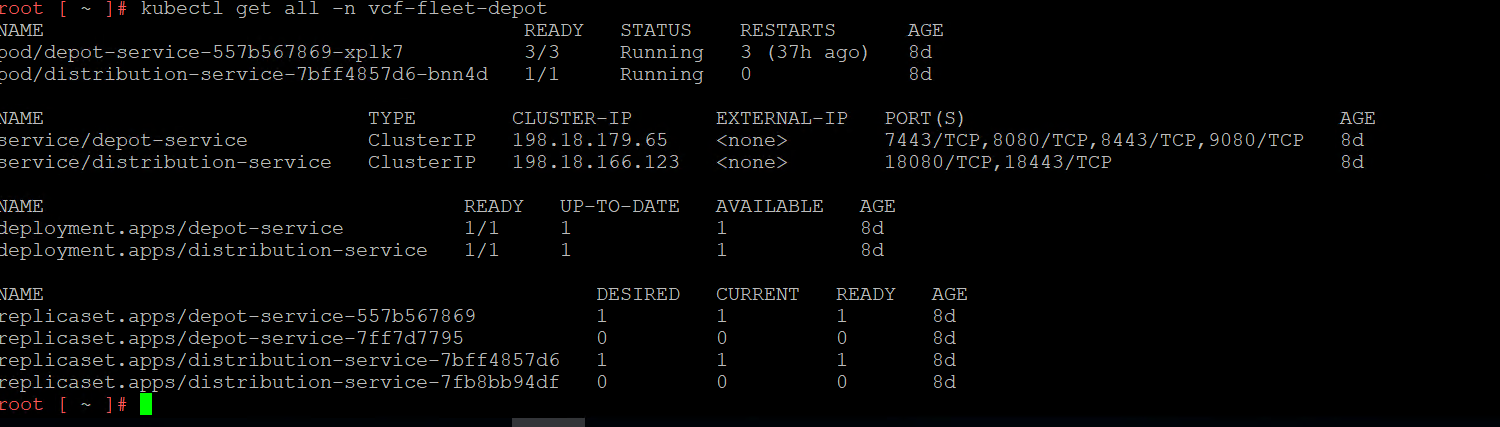
- vcf-fleet-depot – Hosts the software depot services that manage and distribute VCF software bundle required by VCF lifecycle operations.
vcf-fleet-lcm (Fleet Lifecycle)
vcf-sddc-lcm: (SDDC Lifecycle)
vcf-fleet-depot (Software depot)
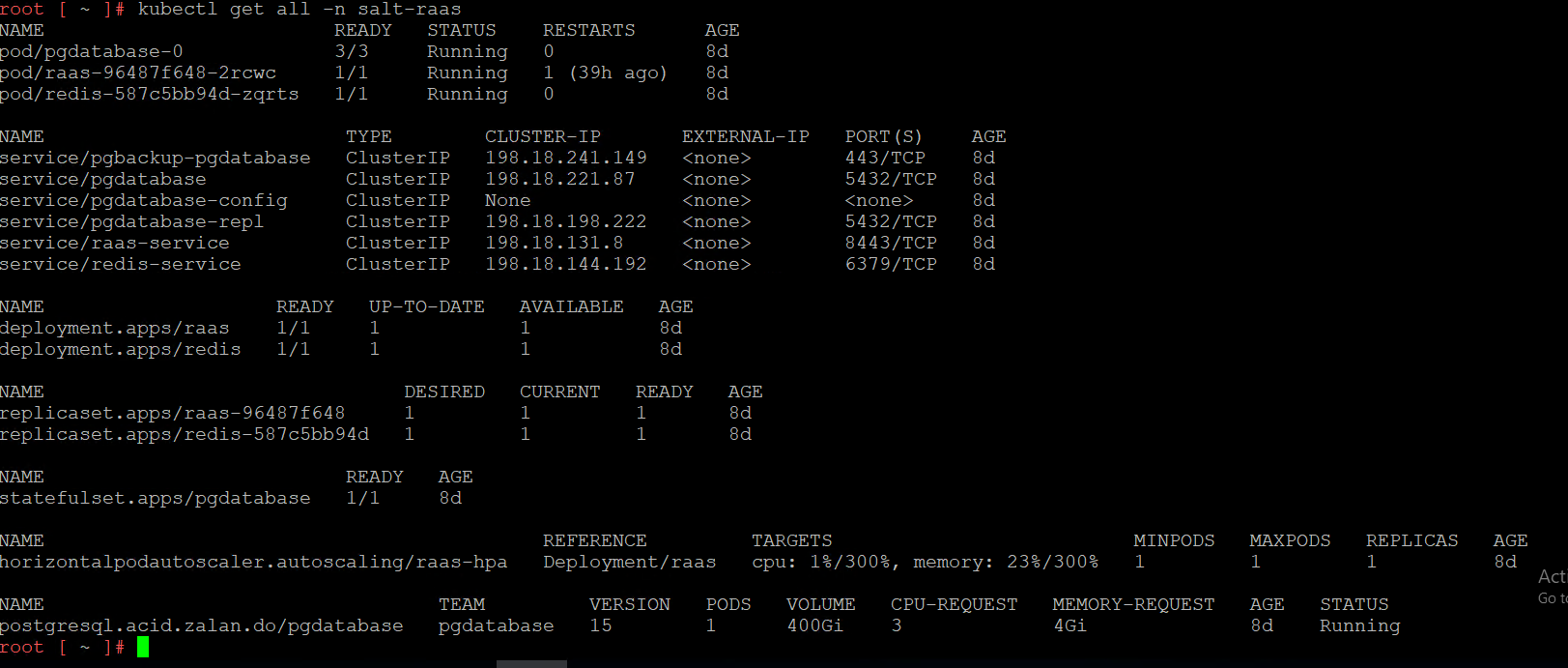
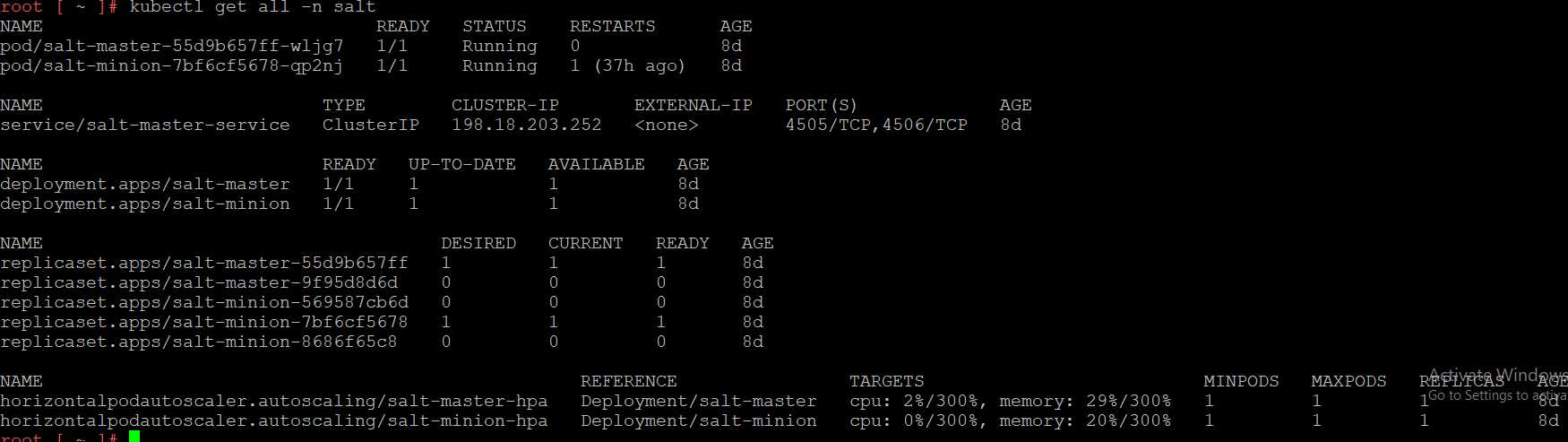
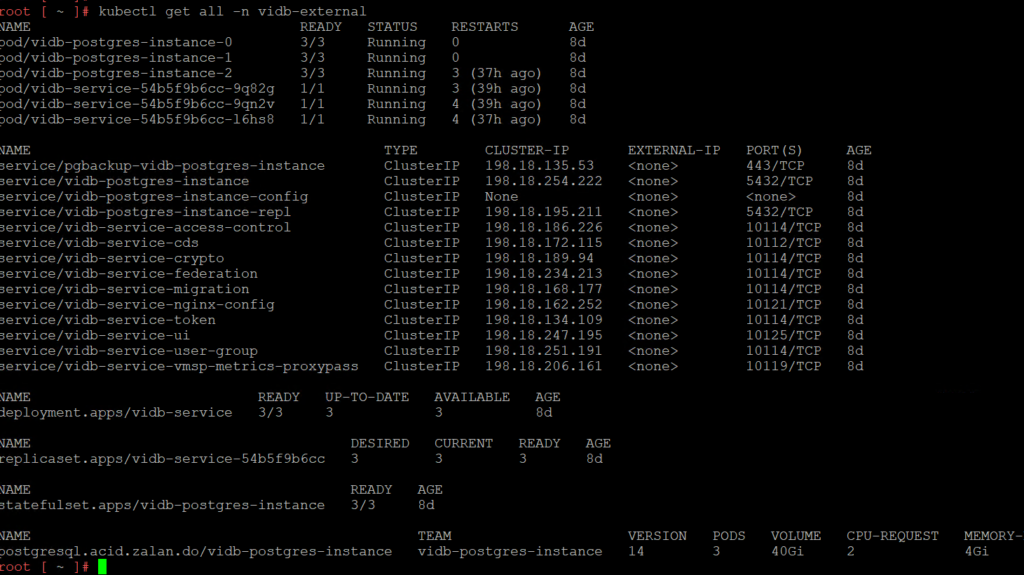
Instance-level services provide functionality specific to an individual VCF instance:
- salt – Hosts Salt Master services used for configuration management and operational automation.
- telemetry – Collects and processes telemetry, health, and operational metrics used by VCF management services.
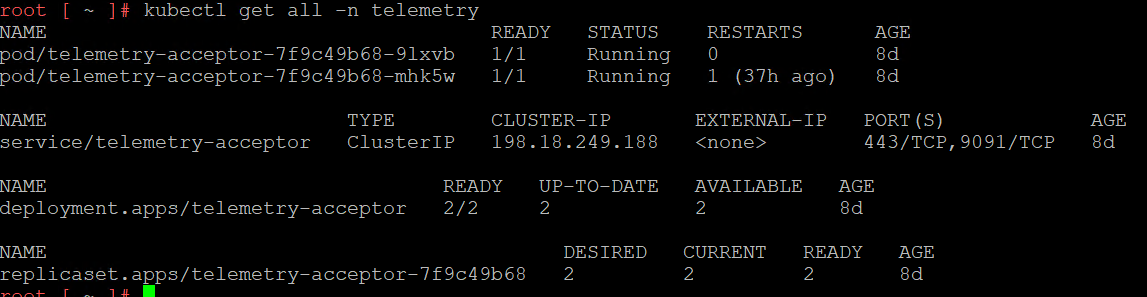
vidb-external – Hosts the Identity Broker services that provide authentication, identity federation, and Single Sign-On (SSO) capabilities across the VCF platform.
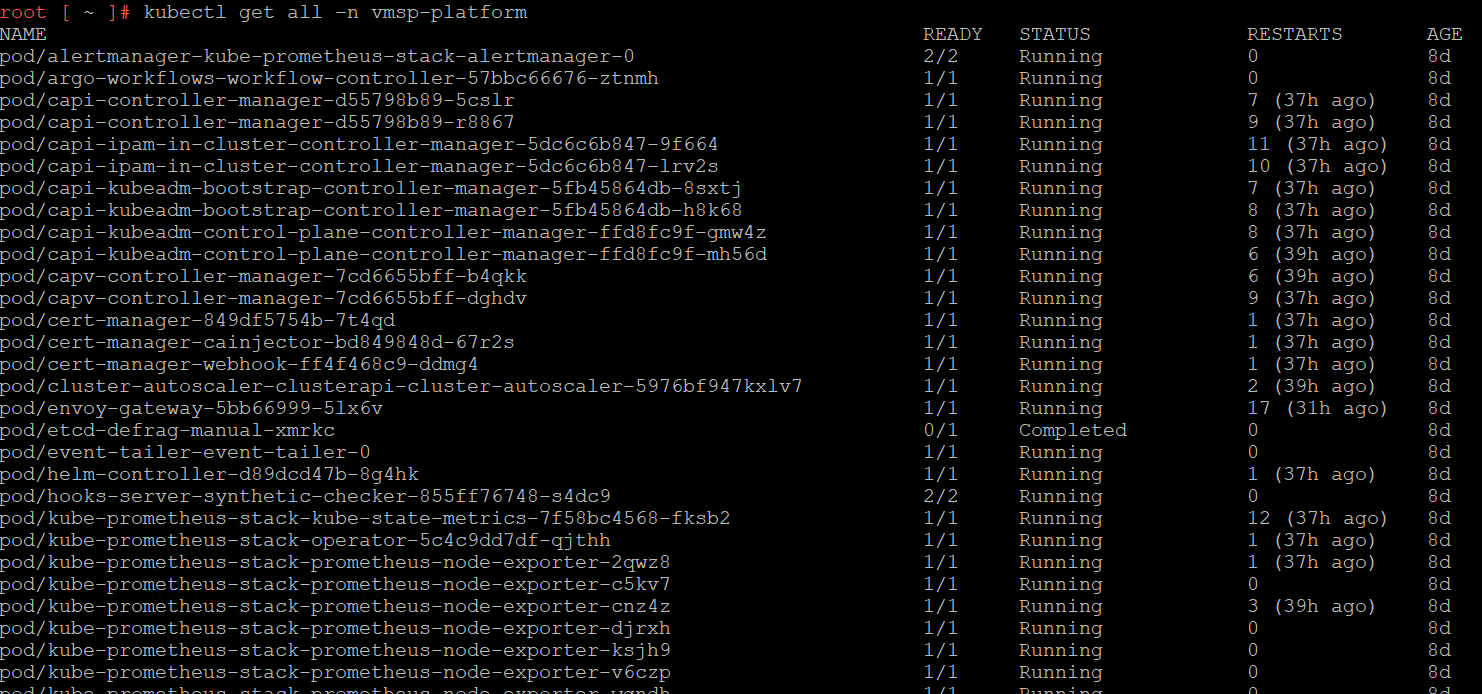
vmsp-platform – Contains the core VCF Services Runtime components that provide the Kubernetes-based platform used to host and orchestrate VCF management services.
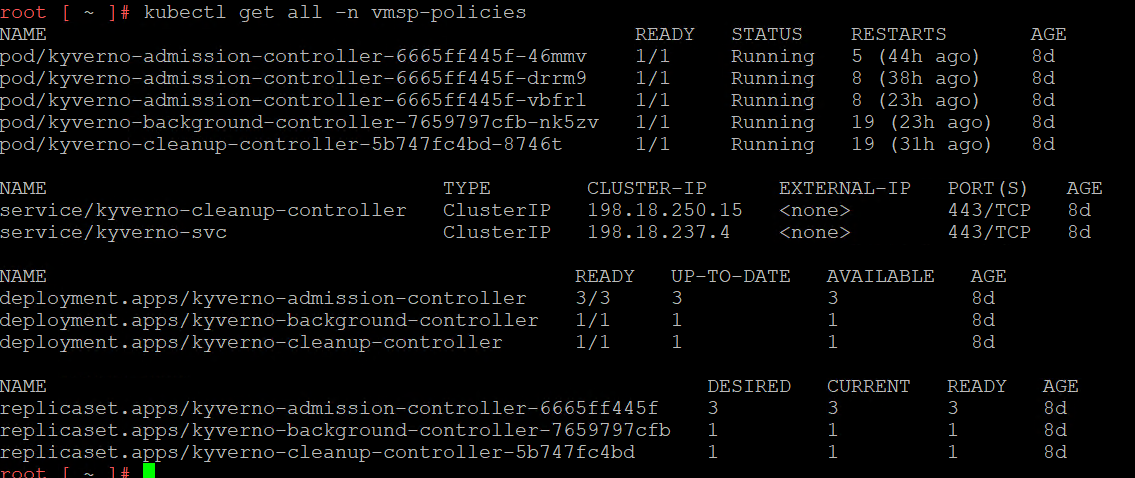
vmsp-policies – Hosts platform policies and supporting services that govern the operation and management of workloads running within the VMSP environment.
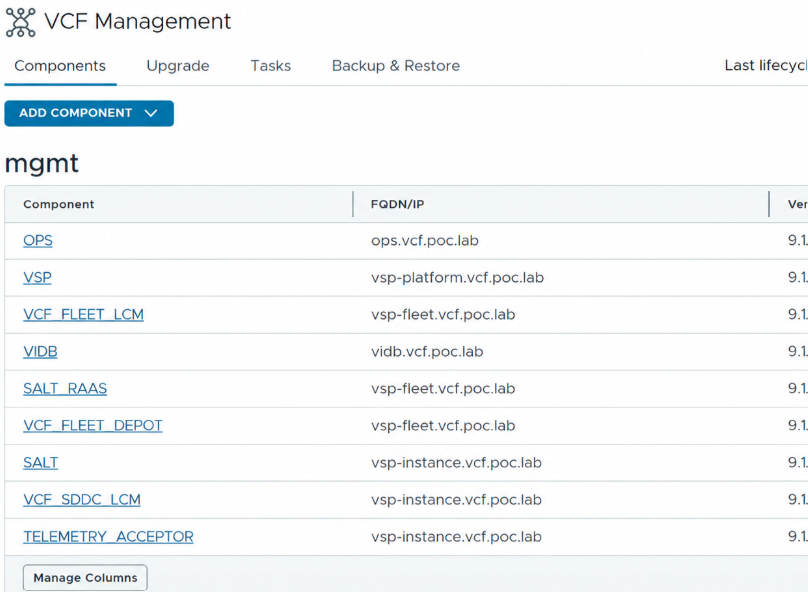
- VCF Ops, VSP and VIDB component will have their own dedicated FQDN.
- VCF Fleet services components like VCF Fleet LCM, Fleet Depot, Salt RaaS will share a single FQDN.
- Instance level components like VCF SDDC LCM, SALT, Telemetry (optional) will share a single FQDN.
In this blog post, we explored the VCF Management Services Platform (VMSP) introduced in VCF 9.1. We reviewed the key management service components, their associated namespaces, and how the underlying VMSP Kubernetes cluster is organized at a high level. Once again, it is important to emphasize that the VMSP Kubernetes cluster is automatically deployed and managed by VCF Operations. While understanding its architecture can be beneficial, direct interaction with the cluster is not recommended unless specifically directed by Broadcom support.
Thank you for reading.
Excellent high level overview, Raju. Here all components and their core functionality were explained in enough detail to clearly understand each components function without so much information that a new reader would be intimidated. Great job!